Tuesday, 29 March 2011

Siddhartha by Hermann Hesse

This novel first published in 1951 gained a new lease of life in the sixties when it fell in to the canon of hippy literature and accompanied many an adventurer on the Hippy Trail from Europe to the East.
Set in India 2,500 years ago it tells the story of Siddhartha, the son of a Brahmin, who leaves the comforts of his family home to live the life of a wandering holy man.
It has biographical echoes of the story of the historical Prince Siddhartha Gautama who became the Buddha and who Hesse's fictional Siddhartha actually meets during his wandering.
It can be read at an allegorical level – the journey that its narrator takes is a symbolic journey through life, or even a series of
incarnations, as he lives at first as privileged young man, then as a wandering ascetic, then a life of materialism and sensual pleasures before becoming a meditative recluse once again.
From early on Siddhartha seems to be close to the sort of spiritual enlightenment that Buddha’s followers are seeking - begging for his food, living without possessions and meditating on the fragility of what we perceive as reality.
Yet after meeting Buddha, Siddhartha abandons that lifestyle and plunges in to the world of materialism, living as a merchant, becoming the lover of a courtesan, indulging in fine wines and rich foods.
He becomes so immersed in his materialistic existence that the spiritual being he once was is all-but forgotten.
But this existence is necessary to Siddhartha’s spiritual development as well. He needs raw experience rather than abstract philosophy to reconnect with his higher self.
It is only when he abandons his materialistic existence to work alongside a simple old man, ferrying travellers by raft across a river that he achieves true enlightenment.
It is easy to see why it appeals to the Hippy sensibilities as it combines, Eastern mysticism with materialistic abandonment but
suggests that life must be lived before it can be properly understood.

Sunday, 27 March 2011

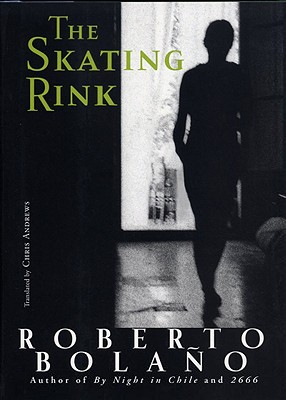
The Skating Rink by Roberto Bolaño

Another Roberto Bolaño novel, an early one, and another little gem to add to the Chilean writer's posthumous canon.
The themes, characters and locations will be familiar to those who have read his more mature works and in many ways you can see him rehearsing some of the narrative techniques he would later develop - particularly in The Savage Detectives.
Three characters, in alternating chapters, come at the same story from different angles, drifting in and out of each other's narratives, reflecting on the same incidents and secondary characters from alternative perspectives.
It is set in Catalunya in the town of Z which lies close to the coast and is busy in the summer months with an influx of tourists.
A senior official siphons of local council funds to build a skating rink in an abandoned mansion for a young champion skater he has become besotted with.
A Mexican businessman who has made good in Spain, who owns shops, hotels and a campsite and who becomes the skater's lover.
And then the Bolañoesque outsider, an illegal immigrant, working as a night watchman at the campsite, trying to stay below the radar of officialdom.
Bolaño maintains a tension throughout in the build-up to a murder, the body found on the secret rink.
He reports from there underbelly of society where it intersects with the comfortable 'respectable' world and occasionally breaks through like an irksome scab.
And as with other novels Bolaño often hints a more mysterious intersection, a slight fracturing in reality that allows an other-worldliness creeps in.
"Sometimes at night, as I walked through the darker parts of the campground, among empty sites and family-size tents strewn with pine needles, I thought of the skating rink and then I was afraid. Afraid that I might come across something from the rink, snagged, hidden in the darkness. Sometimes the air and rats scuttling along the branches of the trees almost made that presence visible..." P158
"... her eyes were covered by the blurry film that was a sign and agent of a force sucking her away toward another reality." P 172
Unsettling as always.
Other Bolaño reviews here.

Friday, 18 March 2011

Horslips/Ulster Orchestra - Irish News review

Horslips were musical pioneers in their 1970s heyday and last night they showed that they were still happy to meet new challenges.
It would be easy for a band of their stature, only recently re-formed after a 30-year break, to tour arenas and festivals and trot out their best-known songs to keep the punters happy.
But to agree to rearrange some of the most iconic tunes in Irish rock music and play them alongside the Ulster Orchestra, conducted by Brian Byrne, was a bold move – particularly as their Waterfront Hall concert was broadcast live on BBC Radio Ulster.
They have a rich source of material to choose from but last night concentrated on their two epic concept albums The Book of Invasions and The Tain, which also contain their best-known songs – Trouble, Sword of Light, Power and the Glory and Dearg Doom.
There was plenty of scope to experiment as Horslips were always more than a three-chord band, combining Irish trad with psychedelic rock and mixing electric guitars with fiddles, mandolins and electric organs.
The original albums were layered works with musical motifs running through the tracks to reappear and morph in new settings.
The band and the orchestra played well off each other, with the orchestra creating a wall of sound – particularly effective during the surreal experience of seeing classical musicians play Dearg Doom.
If there was a criticism it would be that their audience seemed to be confined by the formal setting – have you ever tried tapping along with a 60-piece orchestra?
An interesting musical experiment, certainly, but perhaps Horslips diehards will be looking forward to the next full ‘rock-out’ gig.

This review was written for and first appeared in The Irish News on March 18 2011.

Ecopunks reviewed in Books Ireland

Belfast-based journalist Bailie has two poetry collections and another novel, The Lost Chord, to his name.
[ecopunks] may be viewed as a parable for our times. It is as much concerned with what humanity is doing to the planet as what is happening to the protagonists of the story.
The plot ranges accross the world taking in eastern Europe, the Sahara, South America, Asia and the Pacific as it follows the adventures of its three main characters.
Wolf Cliss is an ecowarrior on the run from a murder charge. Kei Yushiro is a troubled, unconventional archaeologist and Lorcan O'Malley an ageing Irish musician getting used to reality after decades on drugs.
Their three separate stories collide in an exciting finale against the backdrop of questions raised about climate change and its consequences.

This review appeared in the February 2011 of Books Ireland.

Ecopunks is available from Amazon.co.uk or direct from the publisher Lagan Press.

Sunday, 6 March 2011

Truth or Fiction by Jennifer Johnston

Novelist Jennifer Johnston is the daughter of playwright, broadcaster and journalist Denis Johnston who died in the 1980s and whose artistic peak came in the 1930s.
He worked as a BBC radio correspondent during the Second World War in the Middle East and mainland Europe - Italy, the Balkans, France, Austria and Germany - and was one of the first journalists to enter a liberated Nazi concentration camp.
He was also a philanderer, having numerous affairs and leaving Jennifer Johnston’s mother, when the future novelist was still a child, to marry another woman and start another family.
So there is no great mystery on who Desmond Fitzmaurice, the central character of Truth or Fiction is based on.
He is a former playwright who worked as a journalist in the Second World War and who left his first wife (he maintains that she kicked him out) and their young daughter for another woman and had a second family.
Caroline, a journalist, is sent from London to interview the ageing and long-forgotten writer at his Dublin home to dig up some juicy gossip and reassess his career.
She is a reluctant interrogator, going through a mid-life crisis, and quickly finds herself being dragged into Fitzmaurice’s domestic dramas and regaled with tales of past adultories and even a murder.
On reading this novel it would seem that Jennifer Johnston had a difficult relationship with her father. Fitzmaurice’s daugher from his first marriage, who seems to be the fictional counterpart of the novelist and who we hear about but never meet, is said to hate her father.
And the portrayal of Fitzmaurice is less than endearing as he comes across as selfish and only interested in how he will be remembered by history, displaying contempt for his various spouses and romanticising an affair that he said he once had.
There is a theatrical feel to the narrative with Fitzmaurice playing back tapes of himself recalling about his affair, a knowing nod to Krapp’s Last Tape by Samuel Beckett, a contemporary of Denis Johnston.
Caroline is skeptical about Fitzmaurice’s accounts of his past and begins to resent his confiding in her and being forced to become a participant in his domestic tribulations.
There isn’t really that much depth to this novel and most of its intrigue lies in the knowledge that Fitzmaurice is broadly based on Johnston’s late father.
Given the richness of Denis Johnston’s life and the plentiful source material that he left behind - particularly in his war memoir Nine Rivers From Jordan and the philosophical The Brazen Horn - his daughter could have produced a much more layered and interesting fictional portrayal.
But then maybe producing such a slight novel and unflattering central character is saying as much about her attitude to a father who it seems she didn’t really like.

Monday, 14 February 2011

Pictures at an Exhibition by DM Thomas

The early chapters of this novel are strong but it becomes overly complicated in subsequent sections and the plot increasingly convoluted.
Thomas is good at planting information and letting things slowly unravel so that the reader is constantly trying to second-guess him on the true identities of his key players.
Unfortunately the book's blurb tells you exactly what the big twist is in the first section so that Thomas's slow and careful scene-setting that should result in a jolt of horror as you realise what is happening and where is completely undermined.
Two men talking, one of them psychoanalysing the other. The analysts is clearly in a subservient position to his patient.
Visual clues, the smell of smoke constantly in the air and the names of characters - Galewski and Dr Lorenz - and Freudian analysis are all dropped in until about 20 pages in Thomas cranks up the gear and we realise that the action is taking part in Auschwitz, the analyst is a Jewish prisoner and that his patient is one of the commanders responsible for the ongoing massacre.
Thomas details the full litany of atrocities that took place there - the
production-line slaughter of men, women and children and the medical experiments on live humans.
Galewski, who is to an extent collaborating with the concentration camp authorities (soley in the name of staying alive) is not unsympathetic to Lorenz who is suffering from nightmares and a psychosomatic ailments. These turn out not to be the result of participation in the mass destruction of human beings but because of a childhood trauma.
When section one ends, we find ourselves in England in the early 1990s when a new ensemble of characters take up the narration through a series of first-person narratives in the form of letters and counselling sessions.
From the start (and because of the blurb of course) the reader is trying to work out which of them, if any, are Galewski and Lorenz, or one of the other characters we met in part one.
Thomas inserts a series of clues and false trails in against a background of
European high art - Edvard Munch and Gustav Mahler - and Freudian analysis.
Coming after the intensity of the first section the following chapters are soap
operish and sometimes just silly and the lives of the characters tedious. The dramas that the author creates for them are... well dramas, convoluted ones at that.
The combination of Freud and sex are nothing new in a DM Thomas novel. Pictures at an Exhibition has its moments and up until the very end the identities of its main protagonists are still only being hinted at. However, despite a strong start the narrative seems to run out of steam, regaining its momentum in a series of fits and spurts but never quite regaining its early promise.
For my other DM Thomas reviews click here.

Sunday, 6 February 2011

Monsieur Pain by Roberto Bolaño

The story concerns Pierre Pain, a hypnotist and alternative doctor, who has been called in to treat the Peruvian poet César Vallejo who is dying of hiccups.
For most of the story Pain has no idea who Vallejo is, merely that he is South American and that his wife is close friend of a Madame Reynaud, who he is in love with.
The fact that Madame Reynaud called on him despite the fact that he was unable to save her husband's life six months earlier gives Pain hope that he might win her affections.
He is a lonely and introspective person but the world that he is drawn into by agreeing to treat Vallejo soon leaves him confused and alienated.
Bolaño is superb at portraying Pain's growing sense of paranoia as it seems that everyone he encounters knows exactly what is going on while he struggles to understand.
The streets of Paris in 1938, where the novel is set, are claustrophobic as Pain is followed by two Spaniards and told to stay away from Vallejo. The hospital where the poet is being treated is labyrinthine and Kafkaesque. Pain is shunned by the medical establishment and eventually evicted by a receptionist.
There are constant hints that something dark and sinister is going, for example when Madame Reynaud unexpectedly and without explanation leaves Paris for Lille, but while Pain seems to be constantly plagued with a sense of uneasiness he remains baffled as to exactly why and how he should react.
The longest scene in the novel takes place in a cinema where Pain narrates that what is happening on screen as well as what is happening to him, gradually the plot of the movie and the plot of the novel begin to intersect as Pain recognises one of the minor characters as former colleague.
Another former student, Plomeur-Boudou, who studied with Pain and the character in the movie is also in the cinema sitting beside one of the Spaniards who had been following Pain.
Plomeur-Boudou confesses that he is working for the Fascists in Spain and using his mesmeric skills to torture anti-Franco Republicans.
Patterns unfold in this novel, scenes or vignettes that seem to echo through later pages and fold back on themselves.
Monsieur Pain is a stylish tale that is effortless to read, yet richly layered, and left me feeling once again in awe of the late Chilean author.